April 9, 2026
7 Mistakes You're Making with Merit-Based Scholarships (and How to Fix Them)
By Peter Young, Founder of My School List
7 Mistakes You're Making with Merit-Based Scholarships (and How to Fix Them)
Paying for college can feel overwhelming fast. One minute you're celebrating college acceptances, and the next you're staring at tuition numbers that make your stomach drop. The good news is that merit based scholarships can make a huge difference, but many families miss out simply because they're focusing on the wrong things or skipping small steps that matter.
1. Looking Past the Biggest Source of Merit Money
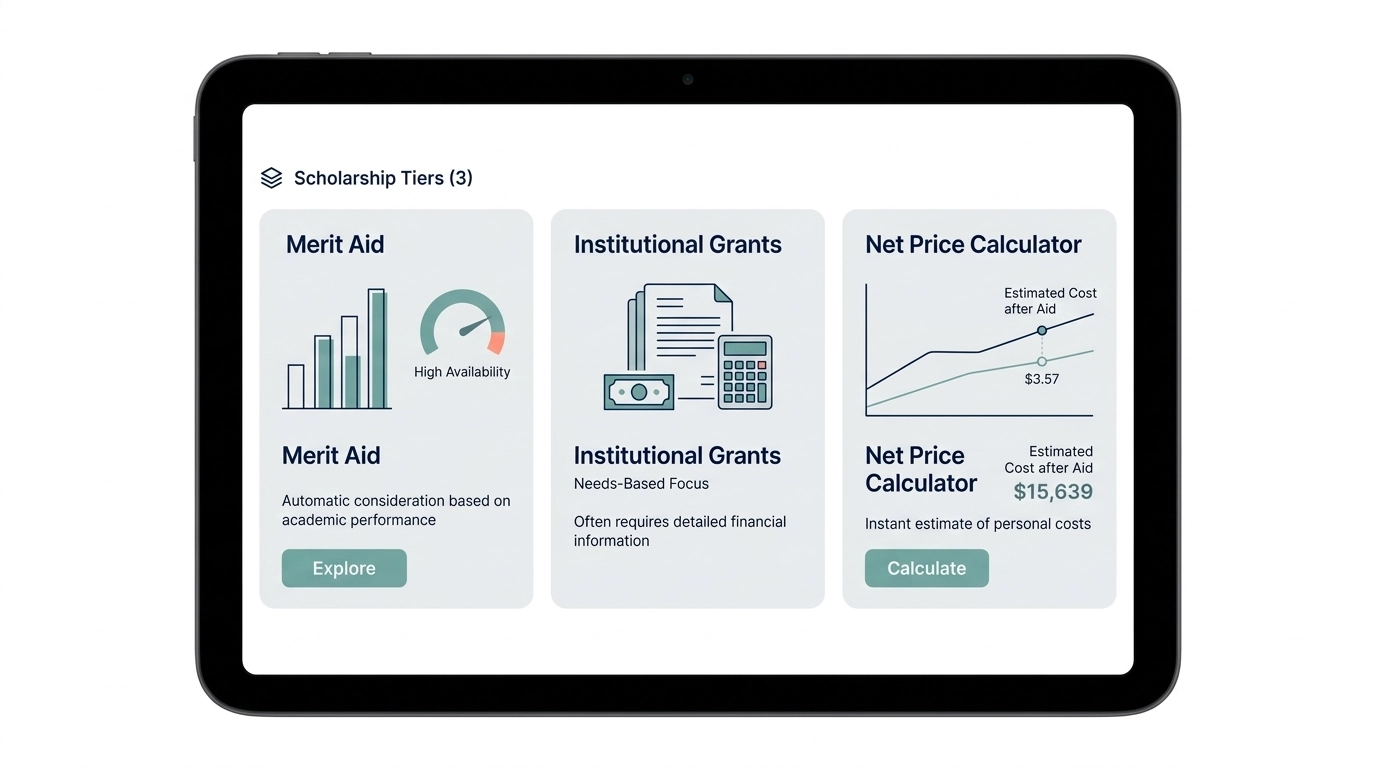
One of the most common mistakes families make with merit based scholarships is spending all their energy on private scholarships while overlooking the colleges themselves. According to the National Center for Education Statistics (NCES), institutional grants and scholarships make up the largest share of student aid, yet many families focus first on big national awards with enormous competition.
In plain English: the biggest merit checks often come straight from the colleges.
- What this can cost: $5,000 to $35,000 per year
- Why it matters: Institutional aid accounts for over 80% of all scholarship dollars awarded annually.
- What to do instead: Start by looking for colleges known for generous merit aid, not just outside scholarships. My School List helps families find merit aid at 643 colleges and filter schools by historical merit generosity.
- Primary Data Source: NCES / IPEDS Financial Aid Survey
2. Assuming the Sticker Price Is the Real Price
A lot of parents see a high private college tuition and immediately cross that school off the list. That reaction makes sense, but it can be a costly mistake. Many colleges with high sticker prices use merit based scholarships to attract strong students, which can bring the actual cost down below what you'd pay at an in-state public university.
That's why it's so important to separate the posted price from the real price.
- What this can cost: $10,000 to $20,000 per year in extra out-of-pocket costs
- Why it matters: 85% of undergraduates at private institutions receive some form of financial aid, significantly reducing published tuition.
- What to do instead: Use each college's Net Price Calculator and compare your student's GPA and test scores with the school's middle 50% range. The Common Data Set guide can help you evaluate where merit aid may be more likely.
- Primary Data Source: College Board / National Association of College and University Business Officers (NACUBO)
3. Skipping the FAFSA Because You Think You Won't Qualify
This one surprises a lot of families, especially parents who assume FAFSA is only for need-based aid. But many colleges require a completed FAFSA before they will award merit based scholarships, even if your family would not qualify for a Pell Grant.
So yes, even if you think you won't get need-based aid, filing the FAFSA can still matter.
- What this can cost: Missing out entirely on college-based merit awards
- Why it matters: Over $2.5 billion in potential aid is left unclaimed annually due to non-completion of financial aid forms.
- What to do instead: Submit the FAFSA as soon as the filing window opens and make sure names, birthdates, and Social Security information match official records so nothing gets delayed past scholarship deadlines.
- Primary Data Source: Federal Student Aid (FSA) Data Center

4. Overlooking Smaller Local Scholarships
It's easy to get excited about famous national scholarships like Coca-Cola or Gates. The problem is that those awards attract massive applicant pools, and the odds are incredibly low. Meanwhile, local scholarships in the $500 to $2,500 range are often much easier to win and can really add up.
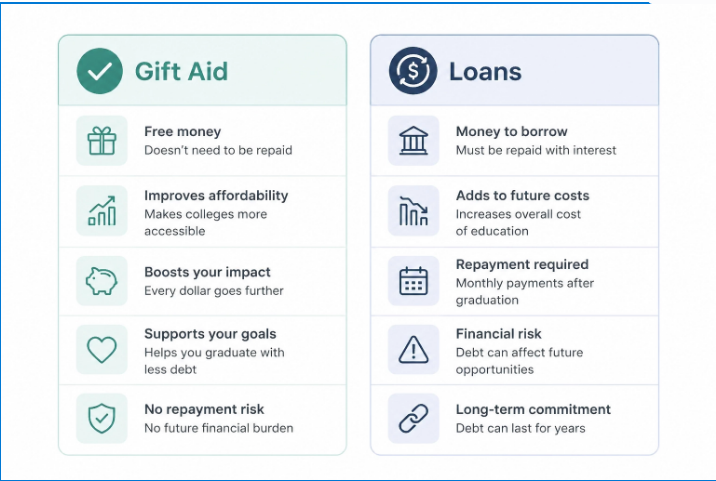
A few smaller awards can cover books, fees, travel, or even reduce the amount you need to borrow.
- What this can cost: $2,000 to $7,500 in missed funding
- Why it matters: Local scholarships often receive fewer than 50 applicants compared to 100,000+ for national programs.
- What to do instead: Spend most of your scholarship search time on local, regional, and niche opportunities. A good rule is to put about 70% of your effort there. Tools like My School List can help families identify local opportunities.
- Primary Data Source: National Scholarship Providers Association (NSPA)
5. Treating Safety Schools Like an Afterthought
A lot of students build a college list around dream schools and then toss in a few safeties at the end. But when it comes to merit based scholarships, those safety schools can be some of your best financial opportunities.
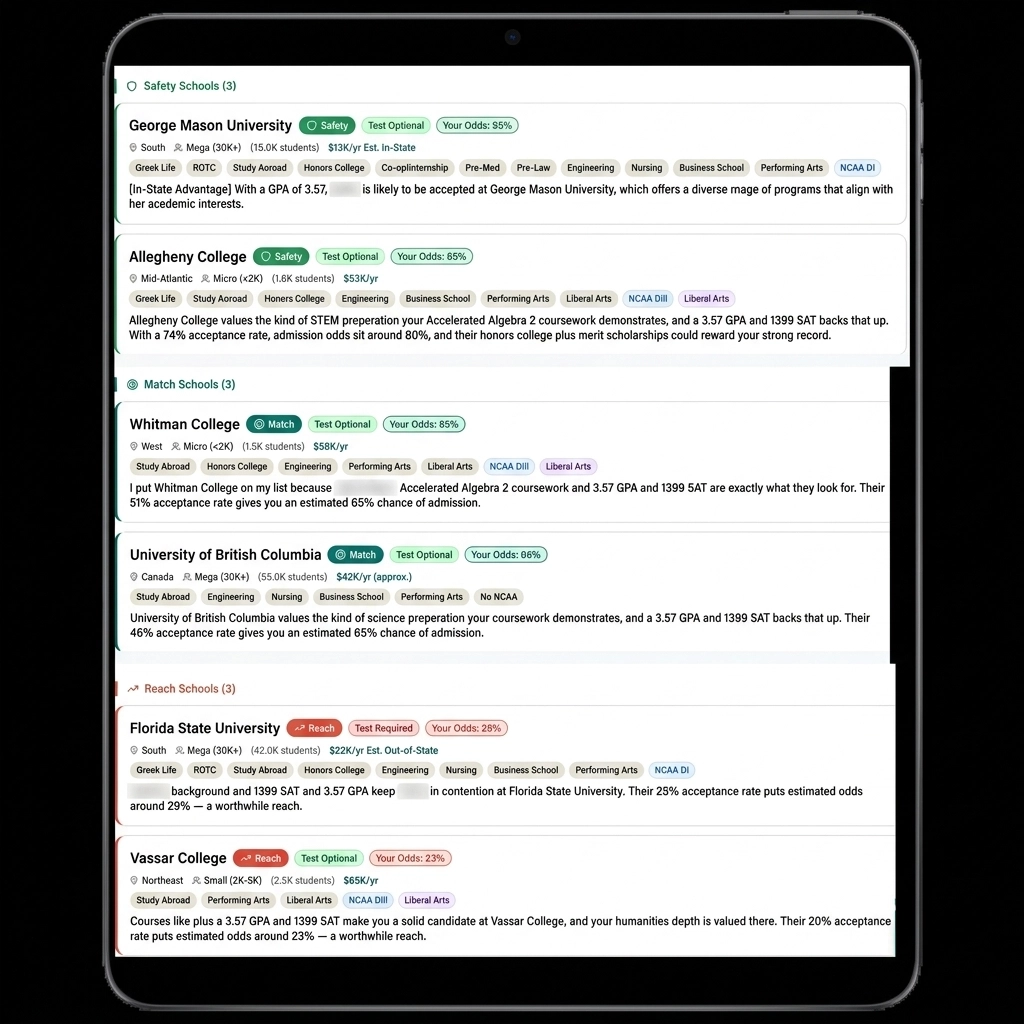
Why? Because colleges are often more generous when your student's GPA and test scores are well above their typical admitted student profile. If your child is in the top 10% of that school's applicant pool academically, the merit offers can be much stronger, including full tuition or even full ride possibilities.
- What this can cost: Missing out on major merit offers, including full tuition or full ride opportunities
- Why it matters: Institutional merit aid usually increases as a student's academic profile moves higher above a college's average admitted student profile.
- What to do instead: Make sure your list includes at least two financial safety schools where your child's numbers are comfortably above the 75th percentile. The My School List platform gives families real-time admission odds and merit estimates based on transcript uploads.
- Primary Data Source: IPEDS / Common Data Set

6. Sending the Same Essay Everywhere
When students are applying for merit based scholarships, a generic essay rarely works well. Scholarship readers want to see why this student is a strong fit for this college or this scholarship, not just a polished essay copied and pasted from somewhere else.
Small details matter here. A student's leadership, service, academic interests, or long-term goals should connect clearly to what the school or scholarship values.
- What this can cost: A weaker ranking in competitive scholarship reviews
- Why it matters: Tailored applications have a 3x higher success rate in the final selection phase compared to generalized submissions.
- What to do instead: Read the scholarship's mission closely and adjust essays so they speak directly to what that program cares about. The essay center can help students shape stronger, more specific responses.
- Primary Data Source: Independent Educational Consultants Association (IECA)
7. Stopping the Search Once College Starts
Many families think the scholarship search ends once freshman year begins. It doesn't. In fact, some departmental scholarships and merit awards for current students are easier to win because the applicant pool is smaller and limited to enrolled students in certain majors.
That means your child may still have opportunities to lower costs after enrollment.
- What this can cost: $1,000 to $5,000 per year for each remaining year of college
- Why it matters: Approximately 25% of all institutional merit aid is reserved for continuing students or specific academic departments.
- What to do instead: Check in with the financial aid office and the academic department at least twice a year. Encourage your student to keep their GPA up, since some upperclass merit awards kick in automatically at 30, 60, and 90 credit milestones.
- Primary Data Source: NASFAA (National Association of Student Financial Aid Administrators)
Final Thoughts
Finding merit based scholarships is not about being lucky. It's about knowing where colleges are most generous, understanding how real college pricing works, and avoiding the simple mistakes that can cost families thousands. If you focus on college-based aid, run the real numbers, file the FAFSA on time, apply for local awards, and build a smart list that includes financial safeties, your family will be in a much stronger position.
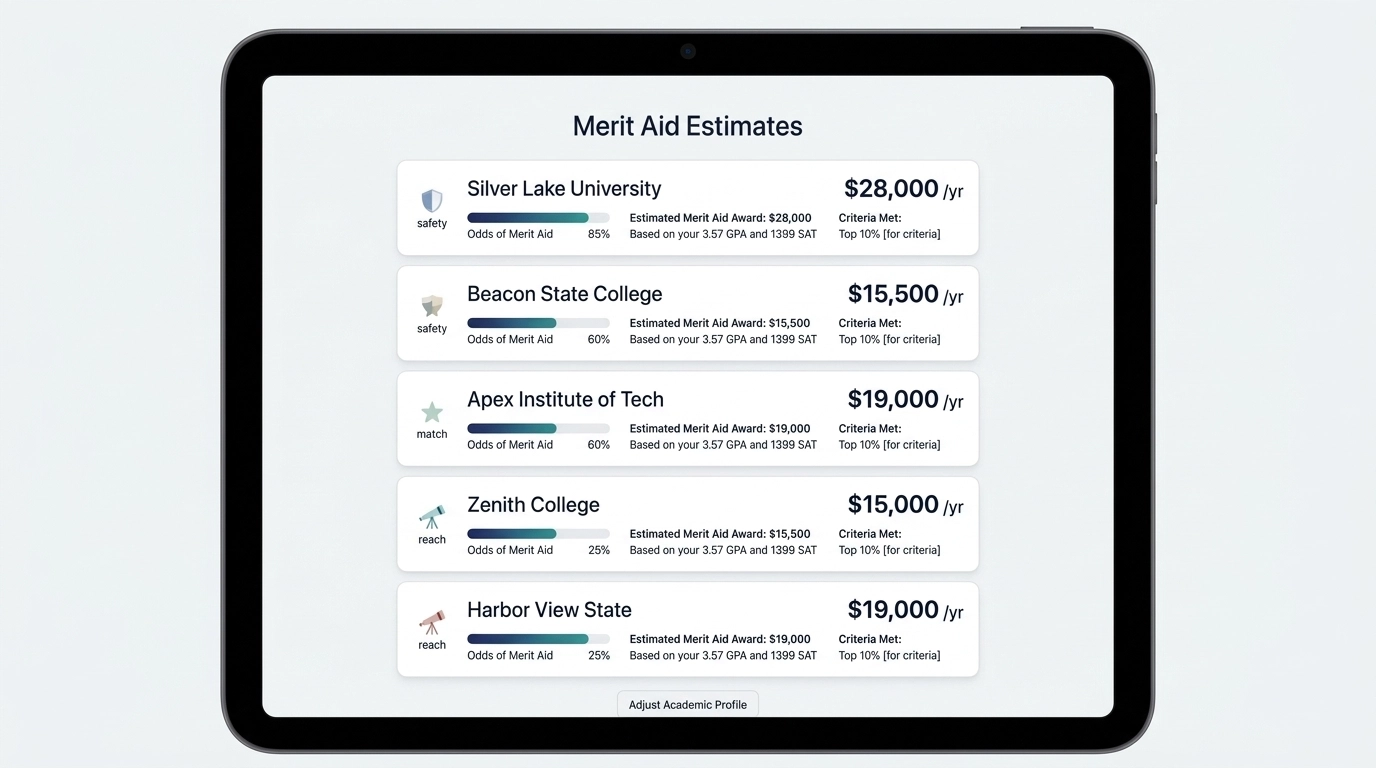
If you want help building a smarter college list and finding merit aid opportunities, My School List can help. Families can upload a transcript, see real admission odds, and explore merit aid estimates across 643 colleges so they can make more confident, affordable decisions.
Disclaimer: Financial aid statistics and institutional policies are subject to annual revisions by the Department of Education and individual university boards. Rankings and estimates provided are for informational purposes only.
Related posts



Ready to build your college list?
Take our free College Fit Quiz at getmyschoollist.com/quiz
Take the Free Quiz →